July 15, 2026
Full-Body Physics VR Controller
Key Features
Muscle Strength
- Weight, leverage, and force transfer along limbs
- Force propagation between player body and environment
- Can get pushed and pulled by objects
Object Interaction
- Grab and move objects, linking them directly with your physics skeleton
- Grip strength for sliding and rotational motions
- Feel difference between light and heavy objects and how they handle
Climbing
- Lift yourself up onto objects and ledges
- Pull yourself closer and use both arms for better leverage
- Use interaction system to grab and pull yourself up
Ground Averaging & Hover
- Prevent getting stuck on small protrusions on the ground or awkward geometry
- Smooth walking over rough/bumpy terrain
- Hovers above the ground, simulating how legs would step on geometry and dampen falls
Dynamic Platforming
- Move along with dynamic platforms
- Apply counter-forces from weight and motion to platform
- Friction still applies, so too fast of counter-forces will make you slide
- Preserve momentum when sliding or jumping off
The Goal
Many VR locomotion systems prioritize comfort and responsiveness but sacrifice physical presence. The goal of this project was to create a more grounded sense of embodiment by allowing the player and their environment to physically influence each other.
The system was designed around the idea that interactions should behave as players expect: pushing, pulling, being pushed, being pulled, transferring weight, and physically affecting the world around them.
Technical Highlights
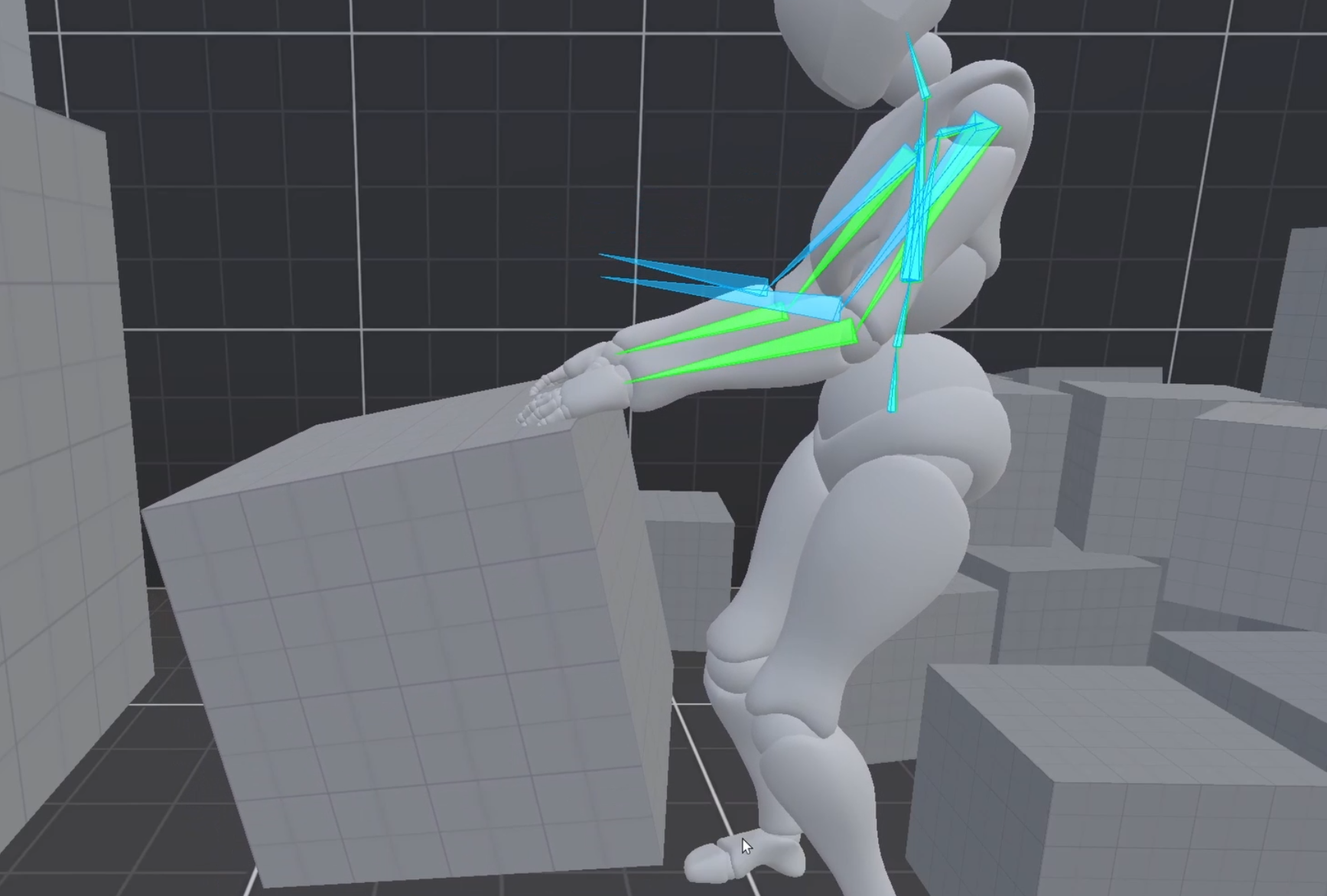
This system uses a layered architecture that separates player intent, animation, and physical simulation into three interconnected rigs:
Input Rig
The input layer captures data from VR devices including the HMD, controllers, and playspace origin. These inputs serve as targets for the animation system, representing the player’s intended pose and movement.
Animation / IK Rig
The animation layer uses inverse kinematics and constraints to estimate full-body movement from limited VR tracking data. This provides a smooth representation of the player’s desired motion while allowing additional animation layers and effects to be applied.
Physics Rig
The physics rig is a fully simulated joint skeleton driven by the animation rig. Using configurable joints, constraints, and motors, it attempts to follow the player’s intended movement while preserving realistic physical behavior.
The physics rig is connected directly to the locomotion rigidbody, allowing forces to naturally propagate between the player’s body and the environment. This creates interactions where pushing, pulling, impacts, and external forces can influence the player’s movement.
Maintaining responsiveness while preserving physical accuracy is one of the core challenges of physics-based VR embodiment. The system balances multiple competing requirements: stability, responsiveness, realism, and player comfort.